Pages

Saturday, February 9, 2013

Not So Lousy Bird Walk

 I always try to teach the importance of nature to my kids but it’s tough at times competing with today’s distractions. I’m not sure who, or how it came about, but my kids recently asked me to take them birdwatching. With all the distractions of computers and video games they’re normally into, I jump at the opportunity to take them to the woods when given the chance.

I believe it was my son Jonathan who asked first, and my daughter Morgan followed his lead like younger siblings often do. My only concern, as with most kids, was getting them up at 6 a.m. on a Saturday and out of the house by 7. Once that was accomplished, the rest of the morning seemed like a piece of cake.

It just so happened that the Great Dismal Swamp NWR was having one of their so called “Lousy Bird Walks” on Saturday. It’s not really “lousy,” but on a winter walk sightings can be a bit unpredictable. The turnout was small, consisting of  me, my two kids and two refuge guides. It seemed as if we had the whole woods to ourselves.

The morning started off great, especially after spotting one of my favorite birds – the red-headed woodpecker. Don, the refuge’s wildlife biologist, said that the red-headed woodpeckers have really made a comeback in the swamp over the last couple years and being seen in areas of the swamp that they weren’t typically established before.

RHWP Photo from Wikipedia, the free encyclopedia

Red-headed woodpeckers don’t act quite like most other woodpeckers – they’re adept at catching insects in the air, and they eat lots of acorns and beech nuts, often hiding away extra food in tree crevices for later. Unfortunately they’re numbers have been in declined over the past half-century because of habitat loss and changes to its food supply. (Ref: Cornell – All About Birds, Red-headed Woodpecker).

One woodpecker that’s not in decline is the red-bellied woodpecker. We saw several of these during our morning walk. Morgan was excited when she spotted one all by herself.
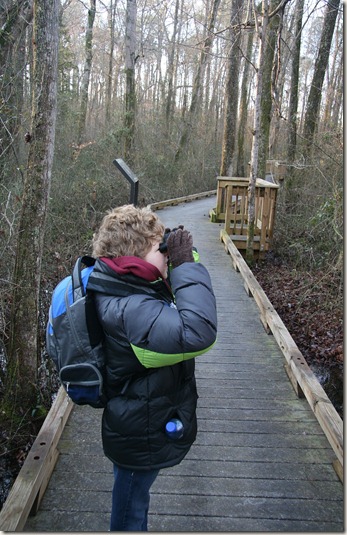
MP

At times throughout our 2-hour hike things got a little slow, but the kids managed to keep themselves entertained.
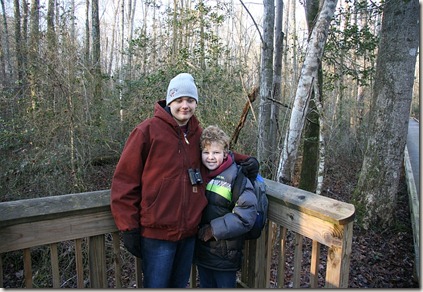
JP-MP

Other cool birds we spotted were yellow-crowned kinglets, fox sparrow, red-breasted nuthatch, winter wren, hermit thrush and a few other more common birds. The morning ended just as it began, with another sighting of a red-headed woodpecker.

Unfortunately, most young children today do not have as many direct experiences with nature. If you get an opportunity, experience and explore the great outdoors with your child — you’ll be glad you did!
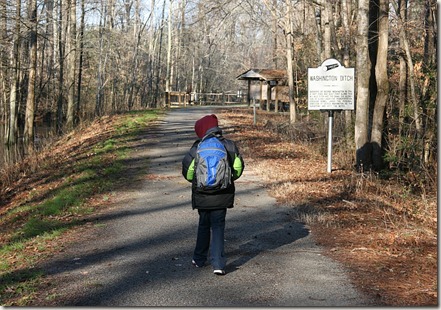
MP2

Check out “Why Kids Need Nature” – http://www.scholastic.com/resources/article/why-kids-need-nature1


Monday, February 4, 2013

Winter Wildlife Festival–Trip to the Bay (Part 1)

 Despite the cold and snow, this year’s Virginia Beach Winter Wildlife Festival was a successful event. This was the fourth year of the event and my first time attending. The festival, put on by the Virginia Beach Parks and Recreation Department, takes place each year in late January, which coincides with the migration of winter ducks and geese into the area, as well as other sea and shore birds that winter along the coast of Virginia. It’s also a great time to spot humpback whales and/or harbor seals just off the coast. However, wildlife is unpredictable and there’s no guarantee what you may see; but if you can tolerate the weather, chances are pretty good that you won’t be disappointed.

The event kicked off on Friday (2/25) with a trip to the Chesapeake Bay Bridge Tunnel (CBBT). The CBBT, located where the Chesapeake Bay meets the Atlantic Ocean, is considered the world's largest bridge-tunnel complex. From shore to shore, the Bridge-Tunnel measures approximately 18 miles and consist of more than 12 miles of low-level trestle, two 1-mile tunnels, two bridges, 2 miles of causeway, and four manmade islands. These manmade islands are great look-out spots for viewing wildlife and its where our day began.

Even with temps in the mid-30s, the wind was mild, making it bearable for most of the day. Our first stop along the bridge was the 2nd island. That’s where we got good looks (with binoculars) at various sea ducks.
Here’s a mix of surf, black and white-winged scoters.

Surf, Black, White-winged scoters, sea ducks
A few long-tailed ducks were also present in the distance. These are some of my favorite ducks.

Long-tailed ducks, sea ducks, Chesapeake Bay
Here’s a purple sandpiper feeding along the rocky edges of the island.

purple sandpiper
I was excited to get a new life bird at this stop – the red-necked grebe. Unfortunately, because of its distant out from the bridge, I didn't get any photos of the bird.

From here, we rode a few miles further up the bridge to the 3rd island. This is where we all got to see what many of us came for – the harbor seals!

Harbor Seal, Chesapeake Bay 
Harbor Seals, Chesapeake Bay
A few years ago this was a rare sight, but now it’s not uncommon to spot harbor seals along the bay between the months of October and April. They like to hang out on the rock jetties of the manmade islands, and sometimes venture further inland looking for food.

Harbor Seal, Chesapeake Bay
Harbor seals grow to about 6 feet in length and reach up to 250 pounds. Most have a blue-gray back with light and dark speckling over their bodies. Those native to the Atlantic are generally smaller than those in Alaska and the Pacific Ocean.

Other sightings were a little more common along the bridge island, like these double-breasted cormorants mixed in among the various gulls – ring-bill, herring, great black-back and least black-back. We also spotted a few northern gannets flying over-head as well.

double-breasted cormorants, gulls, Chesapeake Bay
gulls, Chesapeake Bay
More seals where spotted along the edges of the 4th island and a few red-breasted mergansers were diving in and out of the water as well.

Red-breasted merganser, Chesapeake Bay
From here we traveled to Virginia's Eastern Shore for a lunch-break at Sting Rays, a local favorite, and to re-grouped for our next venture to Fisherman’s Island. More about that in my next post!

Wednesday, January 16, 2013

Preparing for Spring – January Heat Wave

 This is the time of year most gardeners begin to browse seed catalogs and dream of warmer days ahead. Typically, January is the month that winter really settles in and delivers its coldest, nastiest weather. However, this past weekend was anything but. Temperatures reaching into the mid-70s provided all the motivation I needed to get outside in the garden.

My garden to-do list is always long and one quick look around the yard confirmed that. Regardless, I decided to focus my attention on the spring vegetable garden. While planting is still a ways away, there are things that can be done now to get the soil conditioned for the spring planting season. This is the time to put all those shredded leaves I’ve collected this fall to good use. Leaves are packed with trace minerals and when added to the garden, leaves feed earthworms and beneficial microbes. They lighten heavy soils and help sandy soils retain moisture. And best of all, they’re free!

Leaves, garden

Once piled on the garden, I lightly work them into the soil. This will help them break-down even faster.

Leaves, garden

In addition to adding organic matter to the soil, turning the soil this time of year helps to keep winter weeds from becoming established and unearths burrowing pest that will hopefully be lapped up by the birds.

And speaking of birds – be sure to keep those feeders cleaned and stocked with fresh birdseed. Birds are more dependent on seed this time of year and can really benefit from our feeders, not to mention the satisfaction that we get from watching them!

Carolina chickadee, Suet bird feeder

Carolina chickadee

Monday, September 3, 2012

Late Season Hummingbirds

 It wont be long before the rest of the Ruby-throated hummingbirds will be leaving my yard and traveling south to warmer regions for the winter. Many of the adults, especially males, have already left for the summer.

They have been very active in the garden and around my feeders this summer, but I never get tired of watching them.

Ruby-throated hummingbird at feeder, bird

Many think that hummingbird feeders should be removed this time of year because it will interfere with their fall migration. For those unaware, that’s a myth. Hummingbirds will still migrate even if you don’t take down the feeders on Labor Day. It’s not the availability of food; it’s in response to hormonal changes, which are triggered by decreasing length of daylight.

Unless we get an early freeze, I’ll keep my hummingbird feeders up until Thanksgiving. It’s not uncommon to see migrating hummingbirds here in SE Virginia in late fall on warm days. They welcome the extra nourishment to help fuel their long flights.

Ruby-throated hummingbirds at feeder, birds

In fact, hummingbirds will often return to the same feeder on the next trip north or south, just to see if it’s still there. Studies indicate that hummingbirds have great memories.

The recipe for hummingbird nectar is 4 parts water to 1 part sugar (no substitutes). I heat mine in a pot on the stovetop until the sugar is dissolved, and store any extra in a pitcher placed in the refrigerator. And don’t add red dye to the mixture. Most feeders are already red. If it’s not, tie a red ribbon or place a red bow on the feeder until they find it. Once they find it, they will keep coming back as long as it’s kept clean. Also, be sure to replace the sugar water in the feeder every few days.

An alternative to feeders is the use of flowers to attract hummingbirds – especially flowers that continue to bloom until frost. Check out some of their favorites in my garden right now.

Cardinal Climber Vine, Cypress Vine, Hummingbird

Cardinal climber, also referred to as cypress vine, can twine 20 feet or more, but the little red tube like flowers are pretty small. The hummers are thankful that the flowers are still in bloom.

Nearby the cardinal climber is another favorite, Salvia guaranitica, ‘Black & Blue’ salvia.

Salvia guaranitica, Black & Blue salvia, Hummingbird

Another salvia that’s on the menu is Salvia microphylla, 'Hot Lips' salvia.

Salvia microphylla, Hot Lips salvia, Hummingbirds

And probably their favorite in my garden at the moment is Lonicera sempervirens, Coral honeysuckle.

Lonicera sempervirens, Coral honeysuckle, Hummingbird

Whether you provide a feeder or flowers to attract hummingbirds, take time to enjoy them in your own yard and enjoy the rest of your Labor Day!

Hummingbird silhouette, Ruby-throated hummingbird

Sunday, August 26, 2012

Lots Going On

 As some may have noticed, my blogging frequency has been a bit inconsistent over the last year. I’ll admit to it, but won’t make any excuses. It’s just the way things go sometimes. While content has been a little slow on the blog, I have been staying active (outside of my day-time job) with various other projects and personal goals – and on that note, I would like to share some of my latest accomplishments over the last year or so.

My latest and current involvement is with the Virginia Master Gardener Program. I’ve always enjoyed and had a love for gardening ever since I was a child working in my dad’s garden. Now, as a Master Gardener, it’s an opportunity to share that joy and knowledge with others in my community.

VCEMGI’m officially half way through the program after completing the 50 hours of classroom training. Interns are required to volunteer an additional 50 hours during their first year before becoming an official certified Master Gardener. It may sound like a lot but the hours are easy when it’s something you enjoy doing, and the volunteer opportunities are endless. I’ve already racked up quite a few hours already and see no issue completing the requirement way ahead of schedule. If interested in learning more about the Master Gardener program visit your local Cooperative Extension office or website.

VMNLOGOtidewaterchapterPrior to entering the Master Gardener class, I completed the a similar curriculum that’s more focused on the natural history of Virginia, known as the Virginia Master Naturalist (VMN) program. As an amateur naturalist looking to learn more, I knew this training was meant for me.

For those unaware, the Master naturalist program is a volunteer program consisting of educators, citizen scientist and stewards helping to conserve and manage its natural resources and public lands. The program is organized into regional chapters that are overseen by statewide committees. My local chapter is the Tidewater Master Naturalist (TMN). The basic training course is tailored to fit its local environment and community, so no two courses are exactly the same.

Similar to the Master Gardener program, the process for becoming certified typically takes 6 to 12 months and requires the completion of classroom training and then completing the required 40 hours of approved volunteer service. If you’re from VA, check out a list of local chapters in your area here.  Most other states offer this program as well.

I signed up for evening classes last spring and leaped in with others that shared the same enthusiasm about nature as I did. My favorite part of the class was the field training. Our class was involved in lots of fun activities like hiking the trails in First Landing State Park.

Hike, First Landing State Park, Virginia Beach, VA

While there, we met up with a group of folks from the Coastal Virginia Wildlife Observatory to witness and learn about their bird banding program.

Yellow-rumped warbler

Another field trip had us birding with local legendary birder Bob Ake in the Great Dismal Swamp.

Great Dismal Swamp, Hiking

I still have more hours to complete prior to certification, but the fun has just begun!

Explore the opportunities in your own community to see if one or both of these programs would be a good fit for you.


Visit us on Facebook:

Suffolk Master Gardener Association:https://www.facebook.com/SuffolkMasterGardeners

Tidewater Master Naturalist: https://www.facebook.com/TidewaterMasterNaturalist

Saturday, August 11, 2012

Sunflowers in the Garden

 One of my favorite summertime annuals is the sunflower. Sunflowers come in a wide variety of sizes and colors. They begin blooming in late summer and provide lots of color at a time when lots of other blooms begin to fade. However, the main reason I enjoy growing them in my own garden is for their wildlife value.

Sunflowers are great companion plants planted near a vegetable garden. They attract lots of pollinators as well as other beneficial insects that help contribute to the overall health of the garden. They also attract lots of butterflies and would make a great selection for the butterfly garden as well. As sunflowers mature, birds, especially finches, love to feed on their protein-rich seeds. It’s an all-around great summer annual for the attracting wildlife to the garden.

Many varieties nowadays come in various colors and have more than one bloom on the stalk, like these ‘Sunny Babe’ Sunflowers.

Sunny Babe Sunflower

A new sunflower I added to my own garden this year is Tithonia, aka Mexican Sunflower (Tithonia rotundiflora). While it is related, it’s not a sunflower in the conventionally known sense. It’s slightly shorter in height and has larger, bushier leaves coming out of its stem. The center part of the flower is yellow as opposed to the regular sunflower's brownish color. Many compare the flower to the looks of a dahlia, but the color ranges in different varieties are only found in the red-yellow-orange portion of the spectrum. It’s native to Mexico and Central America.

This flower is an excellent attractant for butterflies, hummingbirds and lots of other pollinators.

Tithonia, Mexican Sunflower, Tiger Swallowtail

Tithonia, Mexican Sunflower, Butterfly

These guys grow to a height of 5 to 7  feet! I’ll definitely be saving seeds from these for next year.

This was a volunteer sunflower that came up near my birdfeeder filled with sunflower seeds. Notice the large shaped disk.

Large Sunflower, Sunflower seeds

This sunflower was definitely bred for seed production. This variety (unknown) would make an excellent choice for attracting birds to the backyard. I’ll try to save some of these seeds for next year if the birds don’t beat me to it first.

Sunflowers are an all-time garden favorite that provide that feel-good cheery aspect to the garden. They are remarkably tough and easy to grow. Give them a try in your own garden.

Sunday, February 12, 2012

In Search of the Red-cockaded Woodpecker - Birding Palmetto-Peartree Preserve

 One of my favorite places to get away and escape is North Carolina's Outer Banks. The two-hour southeasterly drive from my home in Virginia through rural North Carolina makes it easily accessible for a long day or weekend trip. In addition to a wealth of marine life, Eastern North Carolina is home to a variety of other animals like deer, black bear, alligators and the endangered red wolf – not to mention the hundreds of bird species that live and migrate through the area.

Whitetail Buck, Bodie Island Refuge, marsh

Whitetail Buck

The Outer Banks is also home to one of my favorite events, Wings Over Water Wildlife Festival (WOW). The week-long event held each November celebrates the natural wonders of the area and offers many opportunities to explore the diversity there. Events held during the week range from birding in the historic Elizabethan Gardens to experiencing an evening out in the Alligator National Wildlife Refuge listening to howls of the endangered red wolves. Somewhere in between all that falls the outing to Palmetto-Peartree Preserve (aka P3) in search of the rare Red-cockaded Woodpecker.

The nearly 10,000 acre preserve, located in Tyrrell County North Carolina, is home to approximately 2 dozen clusters (families) of the rare red-cockaded woodpecker (RCW). I’ve visited P3 on two separate occasions since attending the WOW festival and have been fortunate to see the RCW on both visits.

Red-cockaded Woodpecker, palmetto-peartree preserve

These birds were once common throughout the southern US,  totaling more than a million clusters. Today there are fewer than 20 thousand individuals.

Red-cockaded Woodpecker, palmetto-peartree preserve

Unlike most woodpeckers, the red-cockaded typically excavates nest and roost cavities in living trees (pines) and may occupy them for decades.

They leave their cavity around sunrise each morning to forage for insects in the nearby trees.

Red-cockaded Woodpecker, palmetto-peartree preserve, nest cavity

Look closely at the above photo and you can see the RCW peeking out of the cavity.

RCWs limited habitat of open mature pine forest, preferring the longleaf pine above other pine species, has played a major part in its decline. Over time, the longleaf pine ecosystem slowly disappeared from much of its original range. Early European settlement, commercial tree farming, and agriculture eventually lead to the disappearance of the RCW habitat, and as a result the RCW numbers fell. They were officially listed as endangered around 1970.

Efforts to bring this bird back has been tough, but somewhat successful due to conservation efforts to restore and protect what’s left of their existing habitat.

Be sure to check out Palmetto-Peartree Preserve on the web to learn more, and find out how you can explore the wild and wonderful side of this region of North Carolina.

Tuesday, January 31, 2012

Birding Craney Island

It isn't much to look at when it comes to islands from a human perspective, but to the birds, Craney Island is a sanctuary, and in turn has become a favorite hot-spot for bird watching.

The man-made dredged peninsula disposal site consist of 2,500 plus acres located in Portsmouth, Virginia where the James and Elizabeth River come together. Shallow ponds cover much of the island.

craney island, island

For the most part, Craney Island is an industrial area made up of material dredged from the local channels and ports in the Hampton Roads area. The site was built by the U.S. Army Corps of Engineers in the 1950s and is still managed by them today.

Over the years Craney Island has become a vital food, nesting and rest stop for many migrating birds. Fortunately the corps, working with local conservationist, have recognized the area as an important region for many bird species and work to co-exist with them.

I was excited to tag along with the Virginia Beach Audubon Society group on a field trip to Craney Island last month. Despite the blustery chilly weather that day, we weren't disappointed. Right out the gate we spotted a bald eagle, and from there it only got better. We split up into small groups, jumped in our designated vehicles and toured the island in true caravan style – sometimes stopping every few feet to look at birds.

We were fortunate to see a wide variety of birds ranging from raptors to songbirds, and lots in-between. I was even fortunate to get a lifer on the trip. Below is just a few of what we saw on Craney. Note that some of the photo’s were taken by club members as noted above each photo.

We start out with northern shovelers. We saw lots of these ducks feeding in the ponds. They use their highly specialized bill (from which their name is derived) to forage for food.

northern shoveler, duck

The below photo of American wigeons was taken by our trip leader Steve Coari.

American wigeon, duck

Lots of Northern gannets were flying along the edges of the island out over the James River. It’s fun to watch these seabirds plunge-dive for fish from high above. This is a juvenile Northern gannet.

Northern Gannet Juvenile

Below is an adult gannet about to take a nose dive. Photo by Keith Roberts.

Northern Gannet Diving

One of my favorite raptors is the Northern harrier (below). It’s often seen gracefully gliding low over open fields and marshes.

Northern Harrier

And this was my one lifer for the day – the red-throated loon (in non-breeding plumage). The red-throated loon is the smallest of the loons and winter here along our shores. Photo by Keith Roberts.

red-throated loon, non breeding plumage


Below is a complete bird list for the day, topping out at 37 species.

American Crow
Brown Headed Cowbirds
Belted Kingfisher
Eastern Meadowlark
Mockingbird
Savannah Sparrow
Song Sparrow
E. Starlings
Yellow-rump Warbles
Downy Woodpecker
Bald eagle (Immature)
Peregrine Falcon
Coopers Hawk
Red Tailed hawk
Northern Harrier
Common Loon
Red-Throated Loon
Horned Grebe
Black Duck
Bufflehead
Canvasback
Mallard
Northern Shoveler
Ruddy Duck
Green Winged teal
American Widgeon
Northern Gannet (adults and Immature)
Tundra Swan
Killdeer
Sanderling
Forsters tern
Great Black Backed Gull
Herring Gull
Ring-billed Gull
Brown Pelican
Great Blue Heron
Cormorants

Friday, January 13, 2012

New Year Juncos and Favorite Birds of 2011

Happy New Year! Like many, I always look forward to the new year. I’m not sure exactly why, I’m definitely not getting any younger. For me, I think it’s the feeling of having a fresh start – a new chance to get it right. If I could just stick to all those new year promises that I make to better myself (aka resolutions) , then all would be grand. However, we all know how that usually turns out.

As a birdwatcher, the new year brings promise of exciting new adventures and the hope of new life bird or two. The first bird sightings of the new year for me was the dark-eyed junco. Junco’s are not the most exciting of the songbirds, but they are one of my favorite winter-time birds.

Dark-eyed Junco, Bird

Dark-eyed juncos arrive in my area with the first cold spell of the season (usually late October) and spend the first few months of the new year with us. Many associate there arrival with the first snowfall of the season (aka snowbirds), but since our area doesn’t get all that much snow the first cold front will have to do.

Juncos are ground feeding birds so be sure to toss a little bird seed on the ground when filling your feeders. I keep a small bag of white proso millet, one of their favorite, on hand just for that purpose.

With that said, I would like to recap and share a few of my favorite birds, including some lifers, of the past year. Note that I said ‘favorite birds’, not favorite photographs of birds. I clarify because many of my bird photos leave much to be desired. Birds can be quite uncooperative at times.

First up is the red-cockaded woodpecker (RCW). I’ll take any photo I can get of these guys. The primary habitat of the RCW, the
longleaf pine ecosystem, has all but disappeared. This reduction of suitable habitat has caused the number of RCWs to dramatically decline. They are currently listed as endangered and today there
remains approximately 14,000 birds scattered throughout the southeast.

[Click on any photo to enlarge]

Red-cockaded woodpecker, bird, endangered

Here’s a lifer I got the opportunity to get in the marshes of the Outer Banks of North Carolina this past fall – the salt marsh sparrow.

Salt Marsh Sparrow, Bird

Another 2011 favorite bird was the Northern gannet. This one is a juvenile. Northern Gannets spend most of their life at sea.

Northern Gannet Juvenile, sea bird

And while we we’re talking marine birds, check out this large group of brown pelicans. There’s nothing all that unique about seeing a few brown pelicans, but what was impressive to me was the large number of pelicans in one place. This photo was taken this past fall on a pelican rookery located on one of the barrier islands in North Carolina.

Brown Pelican, Bird, Outerbanks, island

It may be tough to tell, but there’s an American redstart singing in the photo below. This photo was taken in the Dismal Swamp this spring and was another lifer for me.

American Redstart, Bird

One of my favorite little woodland songbirds is the brown-headed nuthatch. This was the first photo I ever got of one of these birds. They’re so small and never sit still!

Brown-Headed Nuthatch, Bird

Here’s a red-shouldered hawk sitting on my Christmas décor in my front yard. At least someone likes my decorations.

Red-shouldered hawk, Bird, Raptor

Last, but not least is this group of American goldfinches. These birds were captured by my Wingscapes Birdcam this past spring.

American Goldfinch, Bird, Bird feeder, Bird seed

Thanks for stopping in and taking  the tour with me. Good luck on your own birding adventures this year.

Again, Happy New Year!