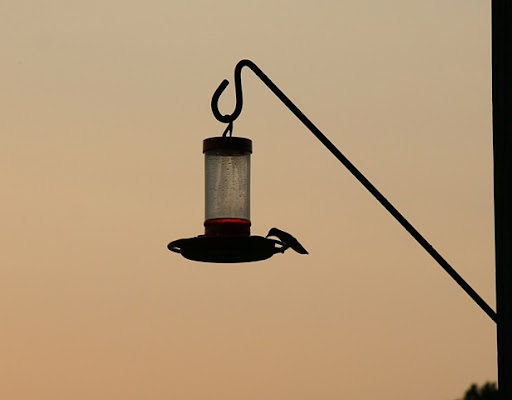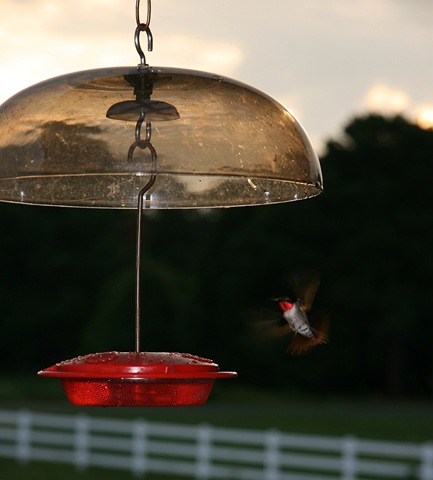
With a variety of flowers and a couple nectar feeders on display, I've had the privilege of having lots of ruby-throated humming birds visit in my yard this summer. They are a real joy to watch. They are usually the first birds that I see in the morning and the last ones that I see before dark. I'm guessing this has to do a lot with there high energy and super-fast metabolism that requires them to be almost constantly on the move. Hummingbirds in flight have the highest metabolism of all animals (with the exception of insects), a necessity in order to support the rapid beating of their wings. Their heart rate can reach as high as 1,000+ beats per minute. They typically consume more than their own weight in nectar each day, and to do so they must visit several hundred flowers daily. At night, hummingbirds are capable of slowing down their metabolism. They enter a hibernation-like state known as torpor. During torpor, the heart rate and breathing are slowed dramatically, reducing their need for food.
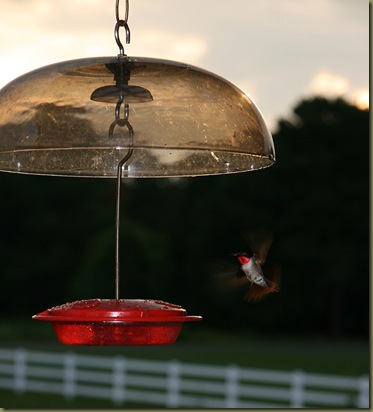
I once believed the old thought that you must remove your humming bird feeder(s) before the fall of the year so the hummingbirds would migrate on time. Now I know that is not the case. Actually, the opposite is true - they will often fatten up in order to survive the long journey, and thus appreciate your feeder up until they leave. Hummingbirds migrate in response to hormonal changes triggered by the decreasing day length; nothing you can do will make them stay too long, so it's not necessary to stop feeding. So, enjoy them as long as you can!
One of the hummingbirds favorite plants in my landscape this year is the 'Alabama Crimson Honeysuckle'. It's an easy to grow (zones 4 - 7) flowering vine that blooms most of the summer here in SE Virginia.
One of my favorite sites for reading / learning about hummingbirds is hummingbirds.net.